<\!DOCTYPE html> Technical Journal | Breeze Windsurfing Base
Technology & Theory

Technical Journal

Dive into the science behind windsurfing — from fluid dynamics to the evolution of the sport.

🕰️ A brief history of windsurfing

The concept of windsurfing was born in 1962, during a chat between aeronautical engineers Jim Drake and Fred Payne. They dreamed up a kite-powered water ski, but kite technology wasn't mature enough.

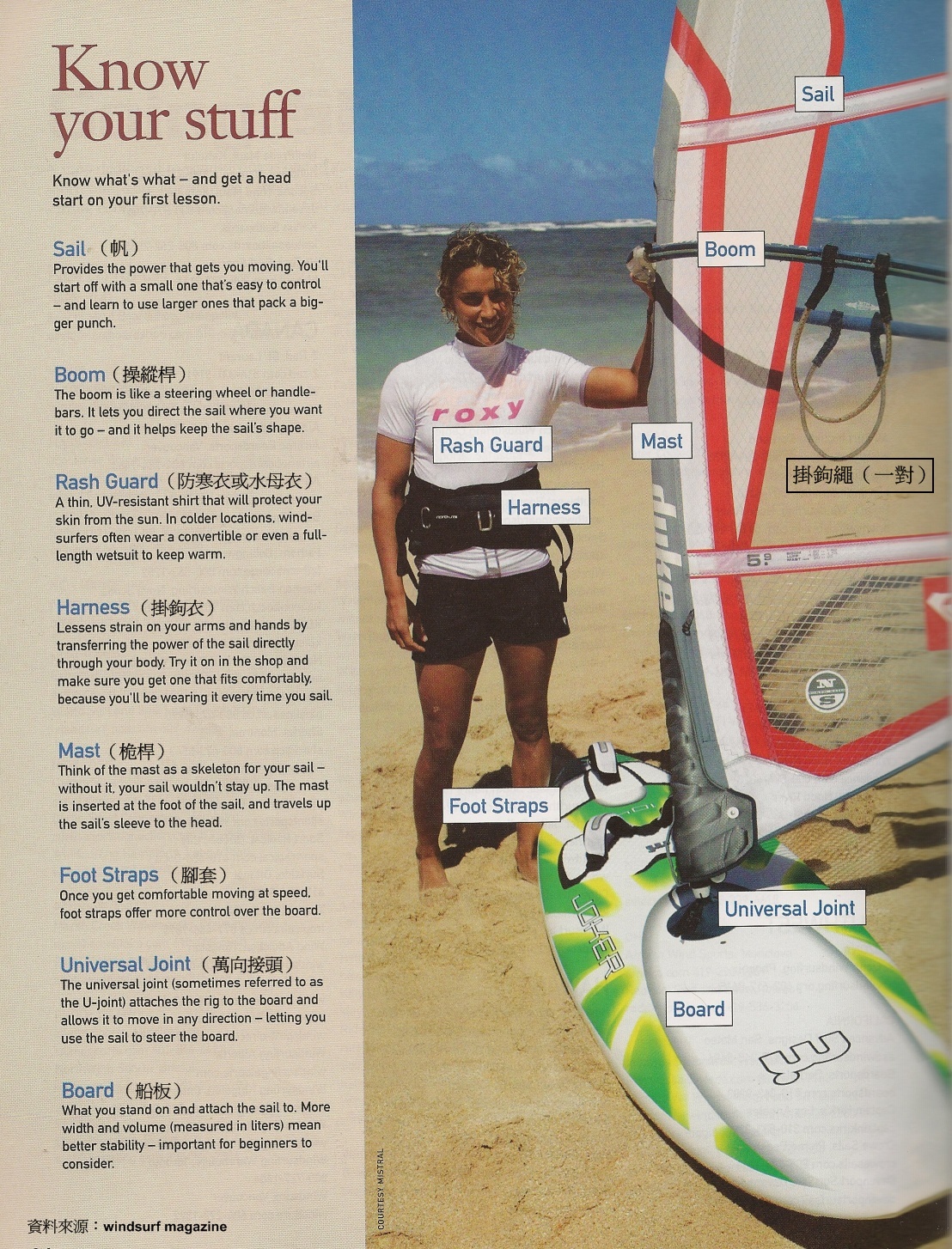
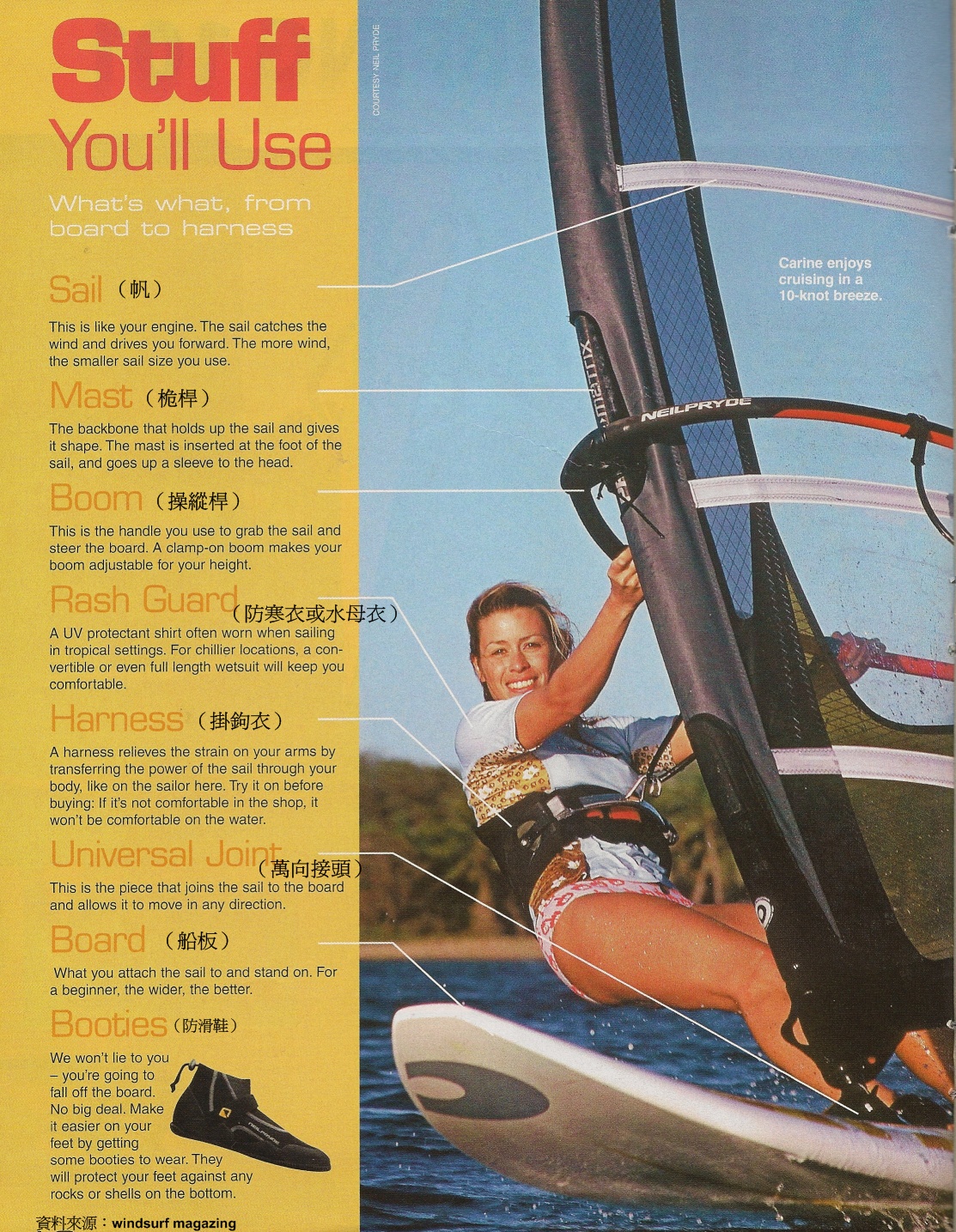
Around the same time, 12-year-old British boy Peter Chilvers fashioned a wooden door into a makeshift sailboard. In 1965, Newman Darby in the US Midwest built something similar with a universal joint connecting sail to board.

In 1966, Drake mentioned the idea to surfboard champion Hoyle Schweitzer at a party. They teamed up and, with sailmaker Bob Broussard's help, built the first proper windsurfer in May 1967.

An uphaul line was added in the second water test, completing all the essentials of today's board. With Hoyle and Diane Schweitzer's marketing, windsurfing became a global phenomenon.
🔧 Basic structure

A complete windsurfer consists of: board, daggerboard / fin, universal joint, mast, boom, and sail.

Structure 1 Structure 2

🌬️ How sails propel a boat

Most people think sailboats only go downwind. But a triangular sail lets you sail upwind too. First, some vocabulary:

The luff is the front edge of the sail. The leech is the rear edge. The imaginary line between them is the chord. The curvature is the draft. The concave side is the windward face; the convex side is the leeward face.

sail structure

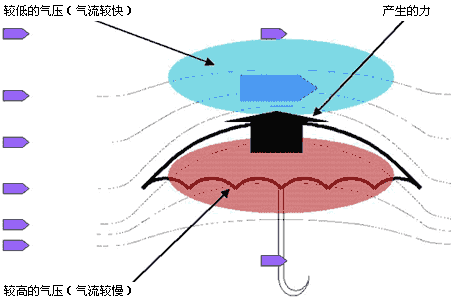
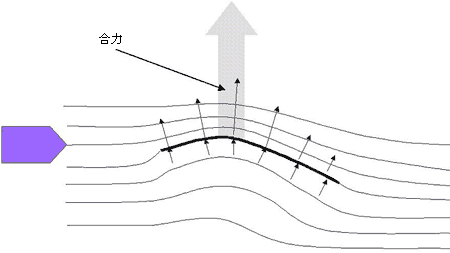
A sail works like an aircraft wing. Air travels a longer path over the leeward (convex) side, so it moves faster — per Bernoulli's principle, faster flow means lower pressure. The resulting pressure difference creates the Total Aerodynamic Force.

force decomposition

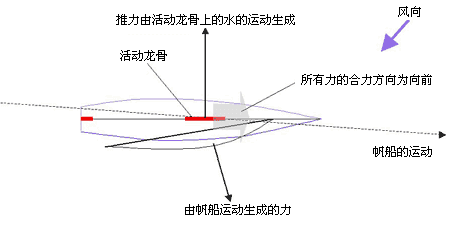
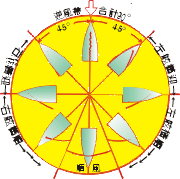
This force splits into a Driving Force (along the boat) and a Sideways Force. The daggerboard/fin cancels the sideways component, leaving only forward propulsion. That's why you can sail as close as ~45° to the wind.

driving force

✈️ Why airplanes fly

lift

Airplane flight uses the same fluid dynamics. An airfoil's upper path is longer (faster flow, lower pressure), creating lift. For a windsurfer, the sail is like a vertical wing — producing forward drive instead of lift.

Tool

🎯 Sail Size Calculator

Enter your weight and current wind speed for a recommended sail size.

Sail Size Finder

* Formula: sail area ≈ (weight / wind) × 1.5. For reference only.