<\!DOCTYPE html> Article Library | Breeze Windsurfing Base
Article Library

Article Library

Curated articles from Windsurfing Magazine.
Thanks to our pioneer members for donating these precious issues.

Our heartfelt thanks to Mr. Zhao Duo, one of Taiwan's earliest windsurfers (a contemporary of Mr. Gao Wujin), for donating a complete collection of Windsurfing Magazine — filled with insightful articles that we're gradually translating and sharing.

Also thanks to Mr. Zhao for donating Taiwan's earliest hand-built windsurfer (from Tainan, with mast and boom still tied with rope\!), and to Mr. Gao for two early triangular sails. We hope one day to establish a Windsurfing Museum showcasing the evolution of boards and sails through the decades.

2003

Windsurfing Magazine Highlights (2003)

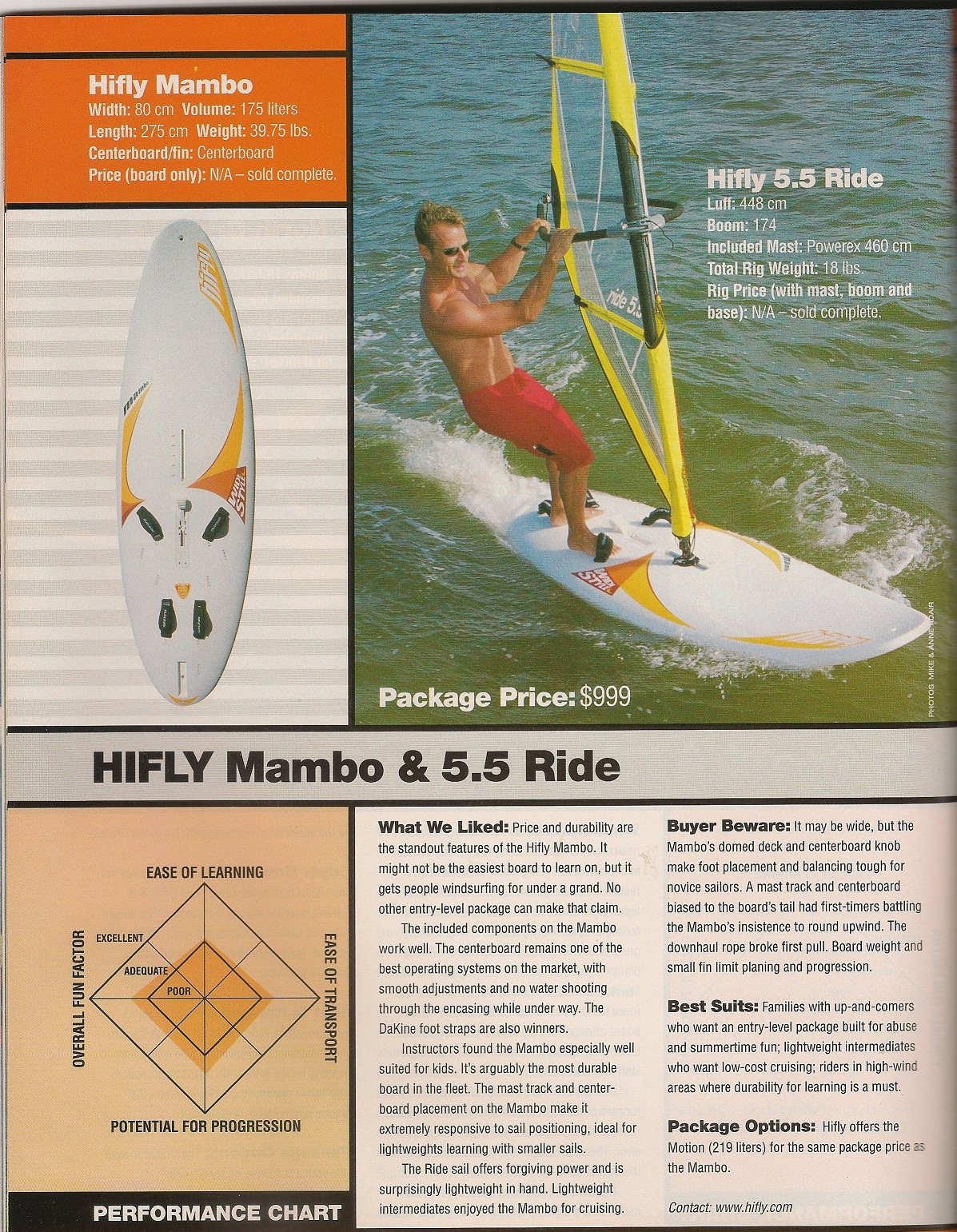
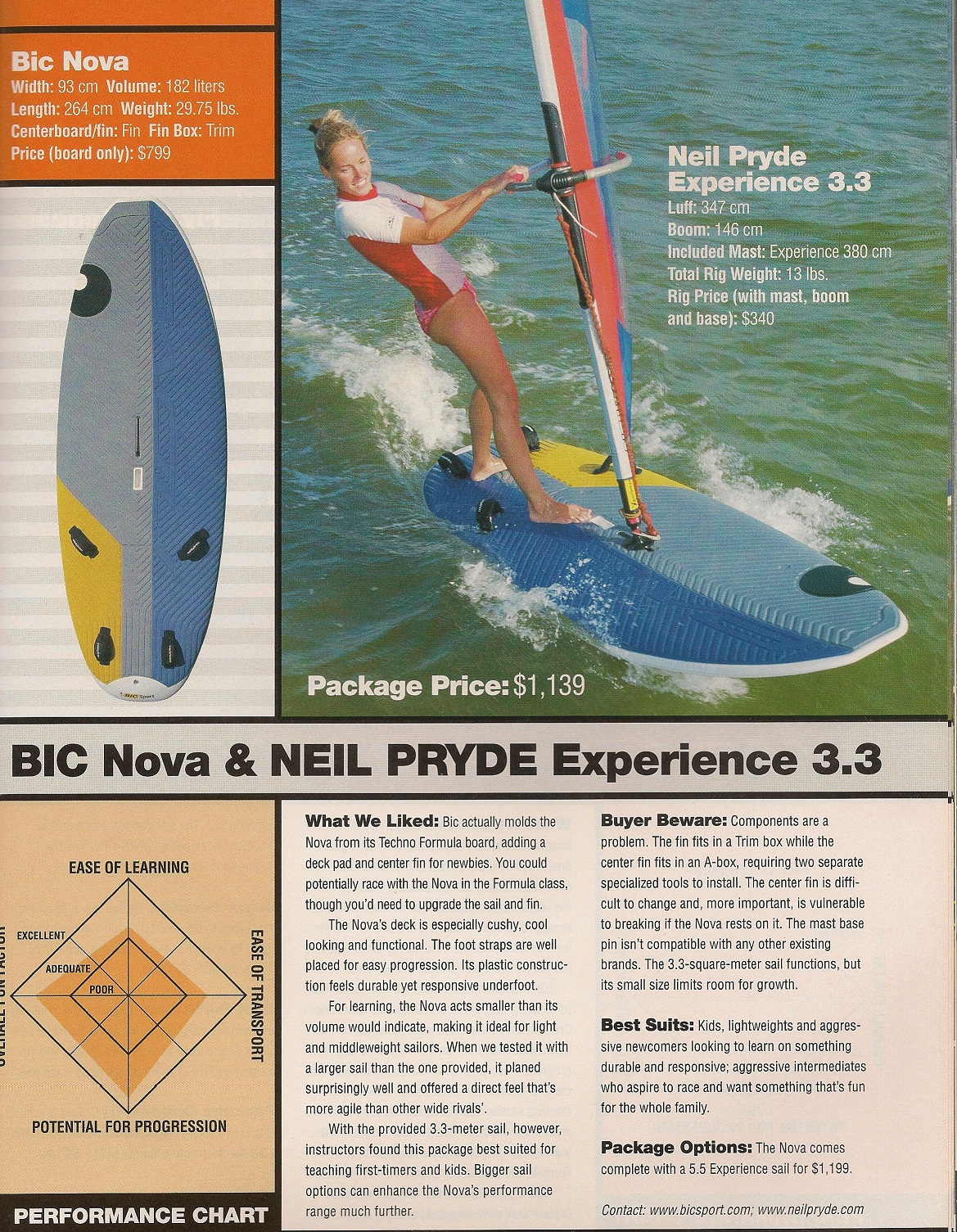
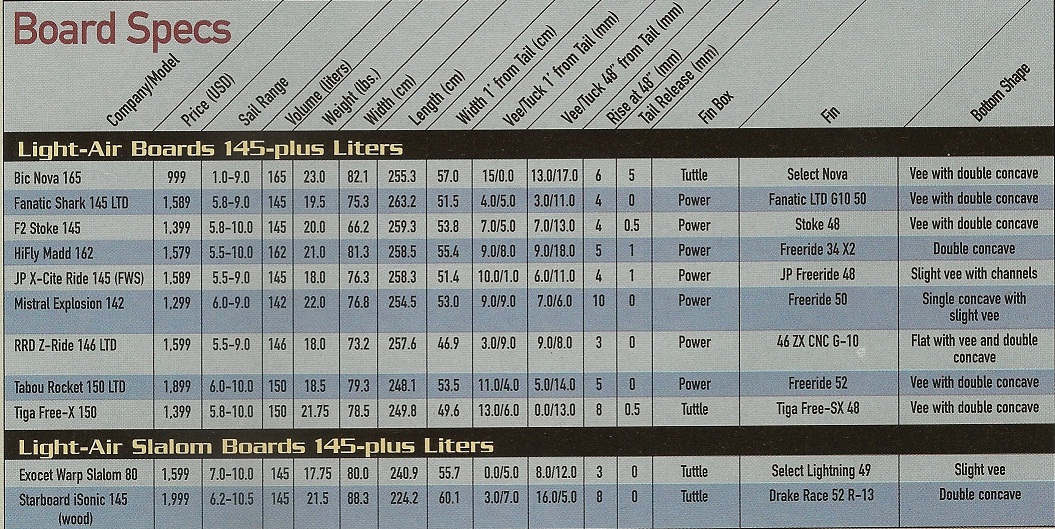
Training boards acquired by the Sports Affairs Council

Original magazine listings and advertisements
Windsurfing Magazine · Jan/Feb 2003 p.14

First windsurfer original blueprint
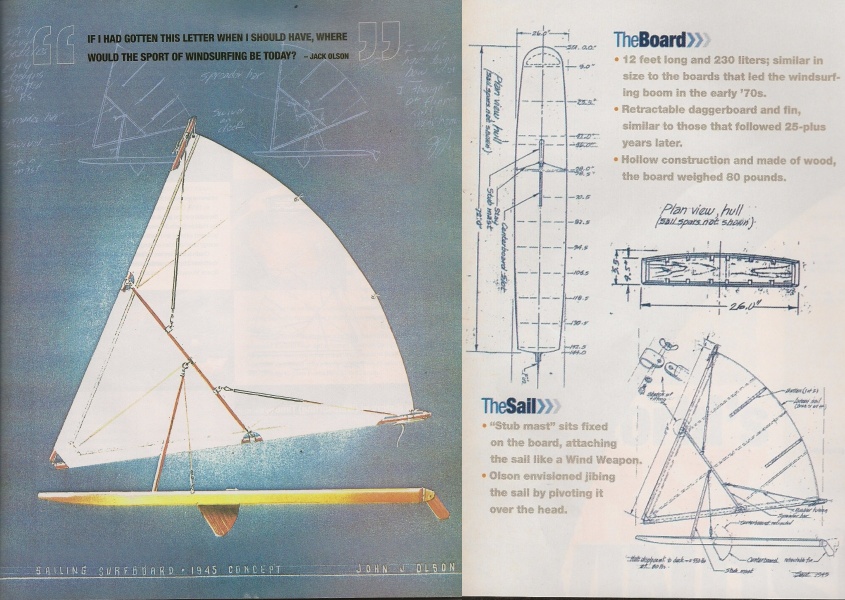
Windsurfing Magazine · Jan/Feb 2003 p.16

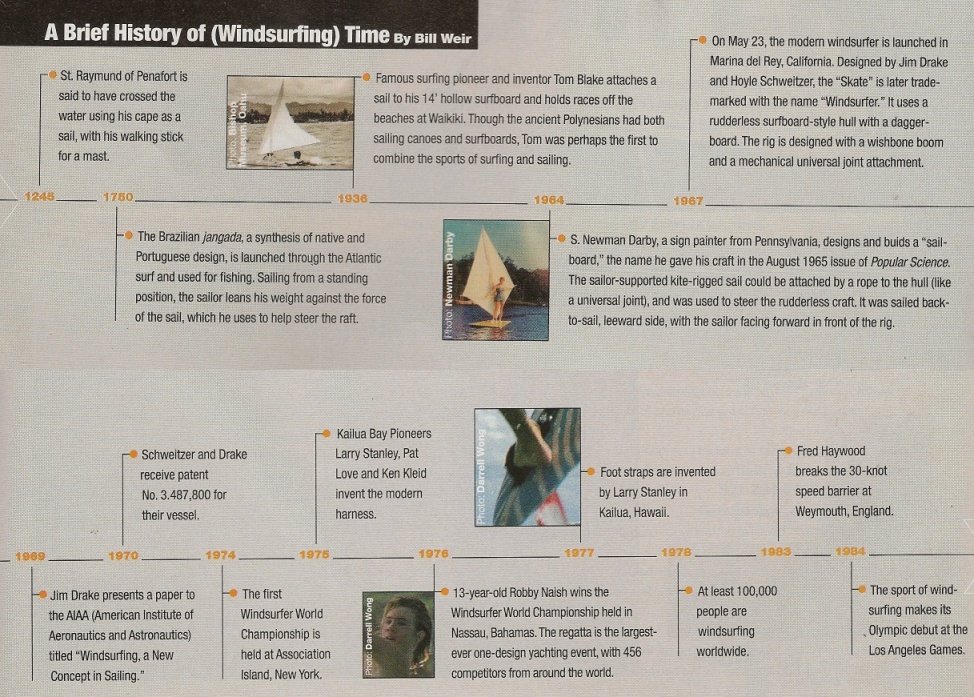
Windsurfing evolution timeline

Windsurfing Magazine · Jan/Feb 2003 p.55

First Board Buying Rules

  1. What you want isn't always what you need.
  2. Time on water is the basis of improvement — a board that lets you sail often is the one you'll improve on fastest.
  3. The wider the board, the easier your balance — less falling means more practice.
  4. If available, take a lesson. Advice from an instructor who's seen you sail is the best.
  5. Don't overestimate your ability. Honest self-appraisal leads to the gear that gets you to your goals.
Windsurfing Magazine · March 2003 p.38

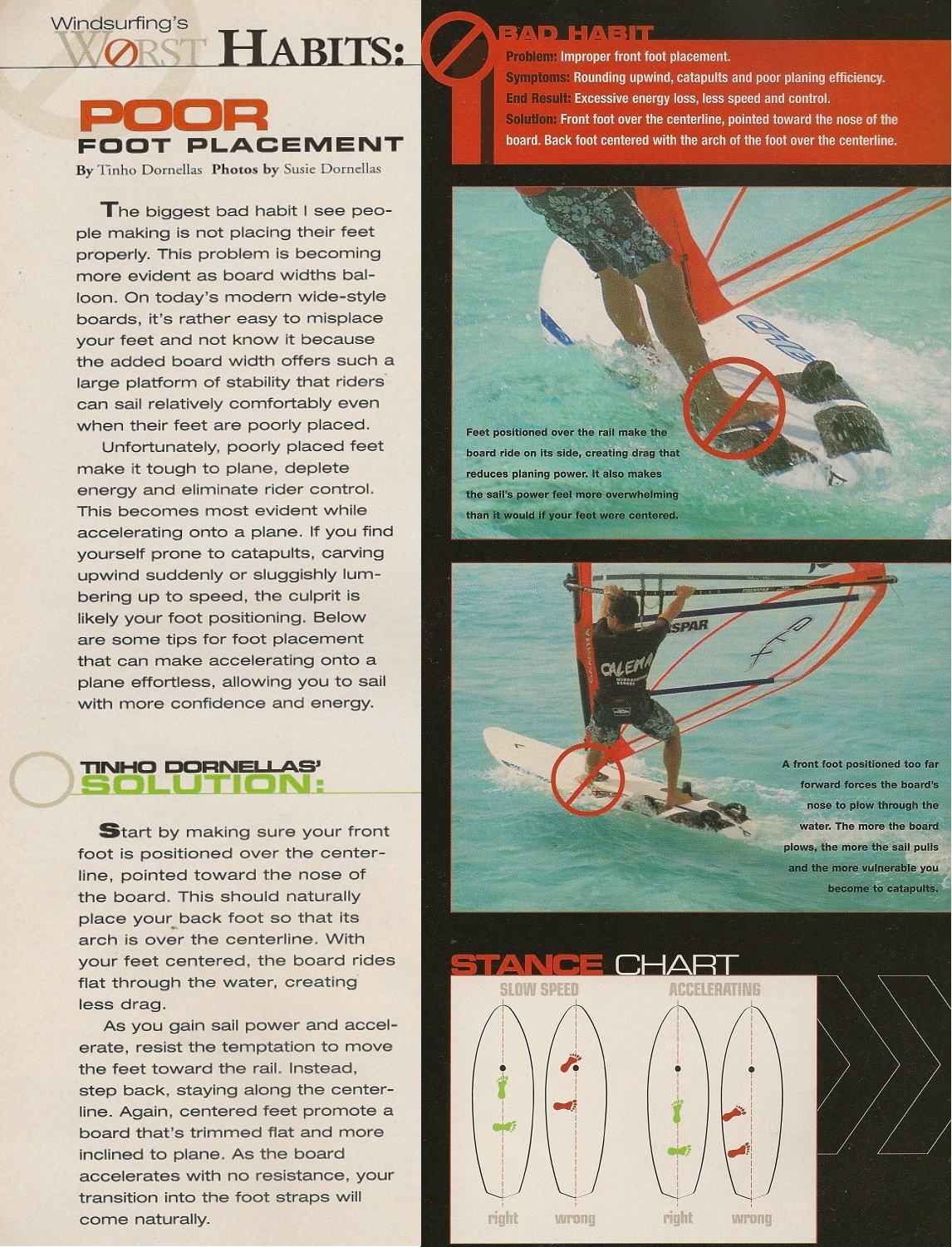
Worst Habits — Poor Foot Placement

Windsurfing Magazine · March 2003 p.42

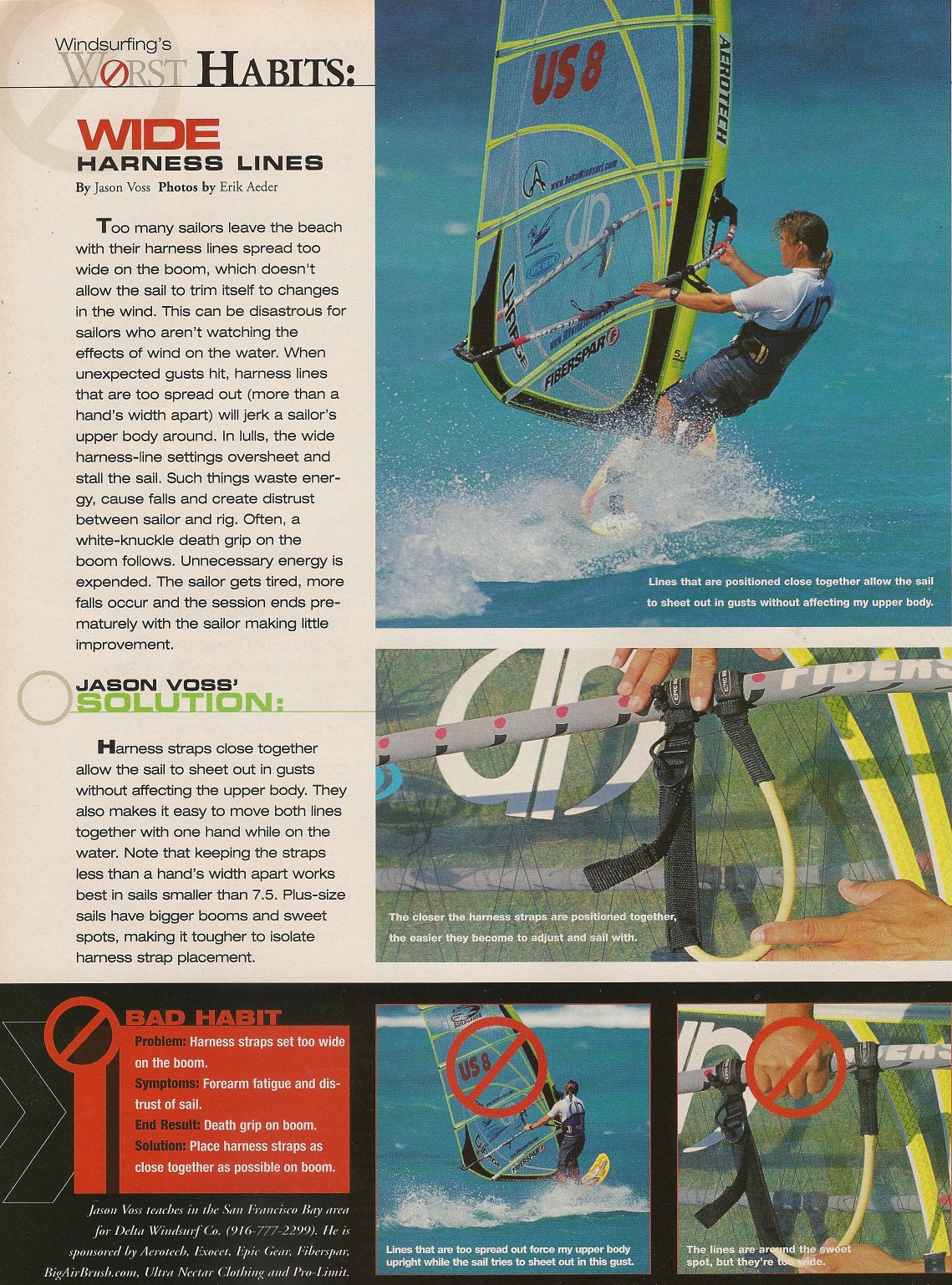
Worst Habits — Wide Harness Lines

Windsurfing Magazine · March 2003 p.45

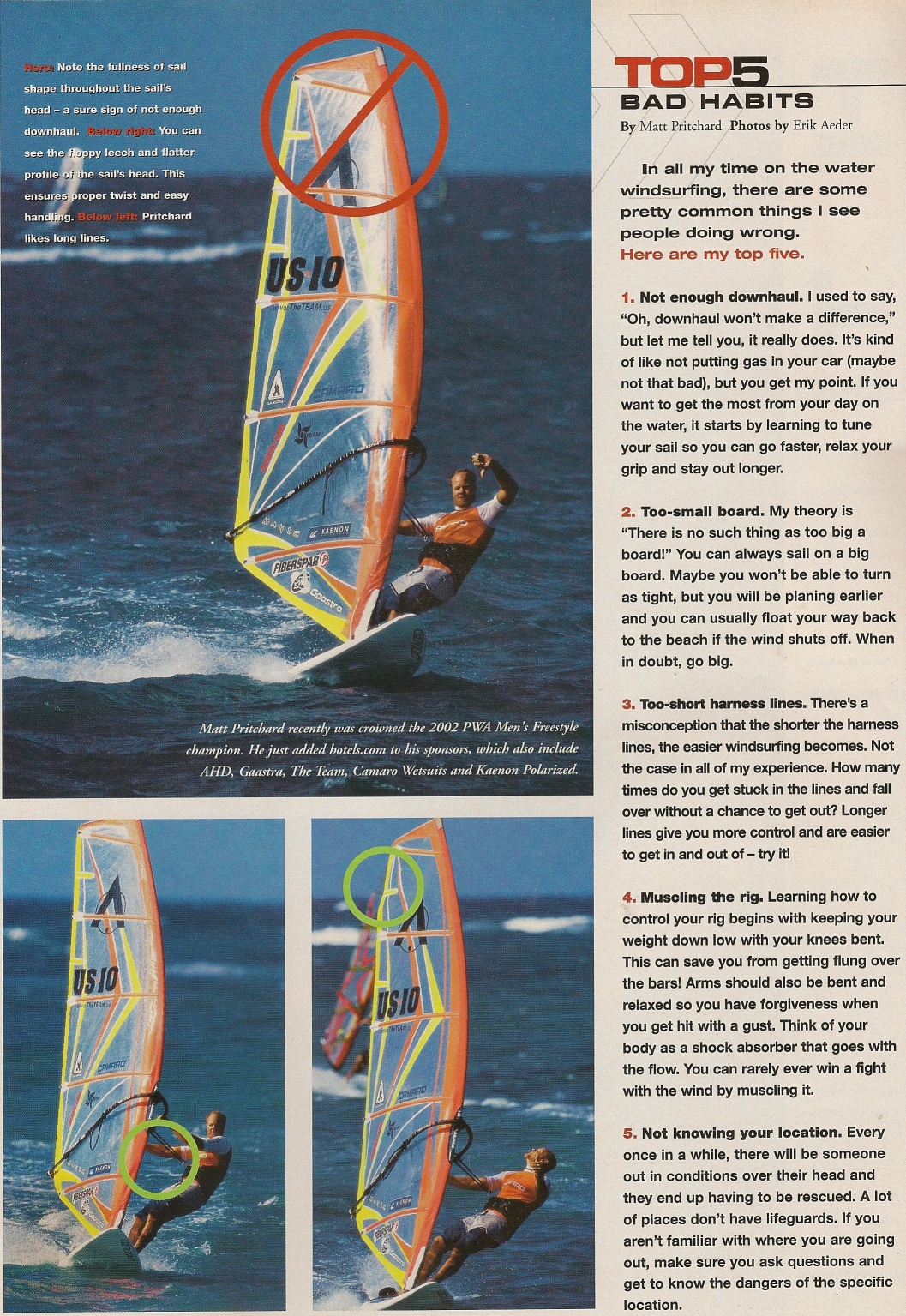
Top 5 Bad Habits

Translation:
  1. Downhaul isn't tight enough. A properly tight downhaul shows a single wrinkle in the top window, not a fully taut panel.
  2. Board too small. There's no such thing as a board that's too big\! It may turn less nimbly but planes earlier and can float you back to shore if conditions turn.
  3. Harness lines too short. Short lines make it easy to get stuck unable to unhook.
  4. Maintain power over the rig. Bend your knees and lower your center to control the sail; arms relaxed and slightly bent so gusts don't slam you.
  5. Know where you are. Not every spot has a lifeguard — always check local conditions and hazards when visiting a new place.
2004 - 2005

Skills Series (2004–2005)

Windsurfing Magazine · May 2004 p.76

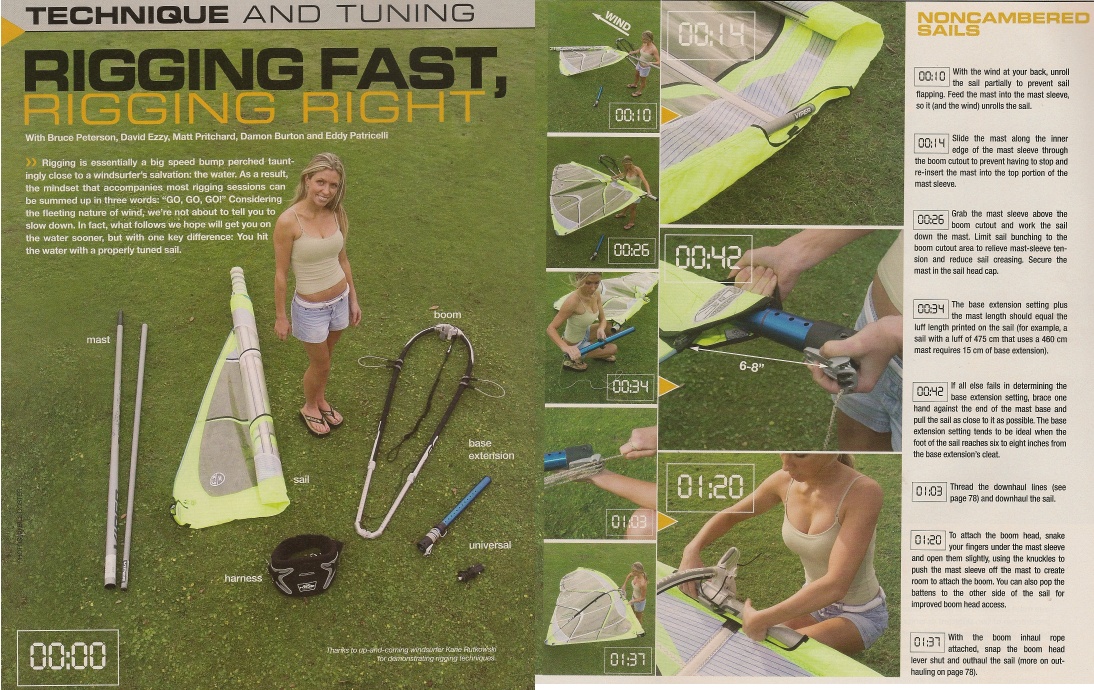
Rigging fast and correct — demonstrated by a pro

Windsurfing Magazine · May 2004 p.82

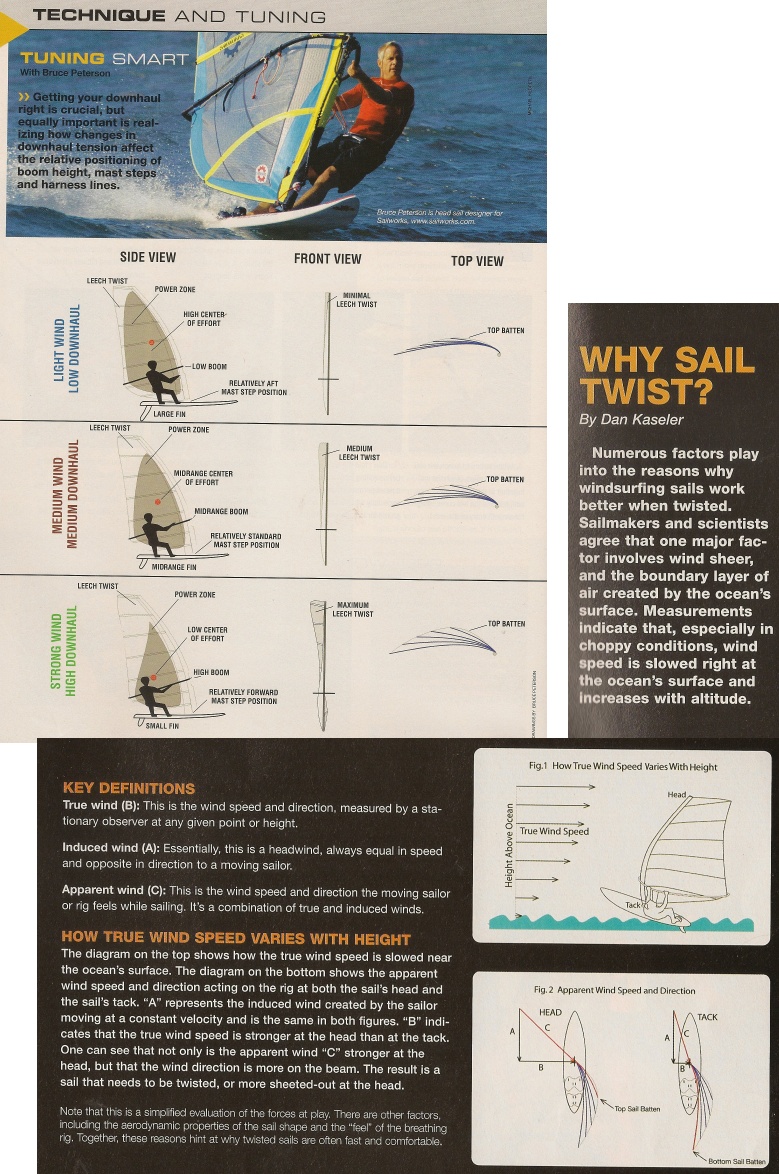
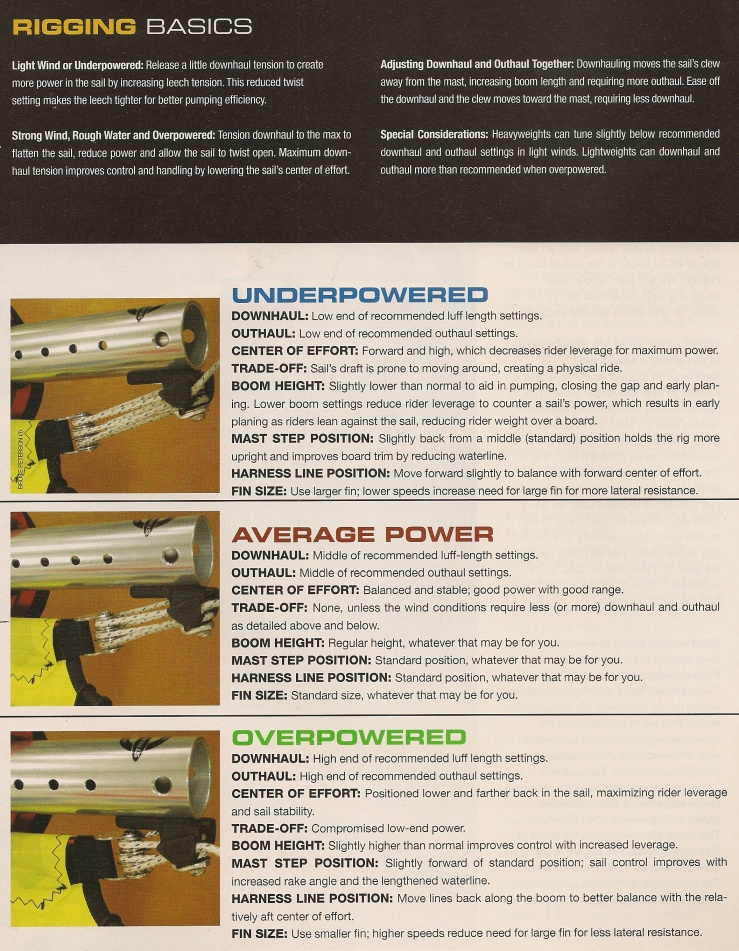
Wind strength and sail leech twist

Windsurfing Magazine · May 2004 p.83

Wind and downhaul relationship

Windsurfing Magazine · Fall 2004 p.83

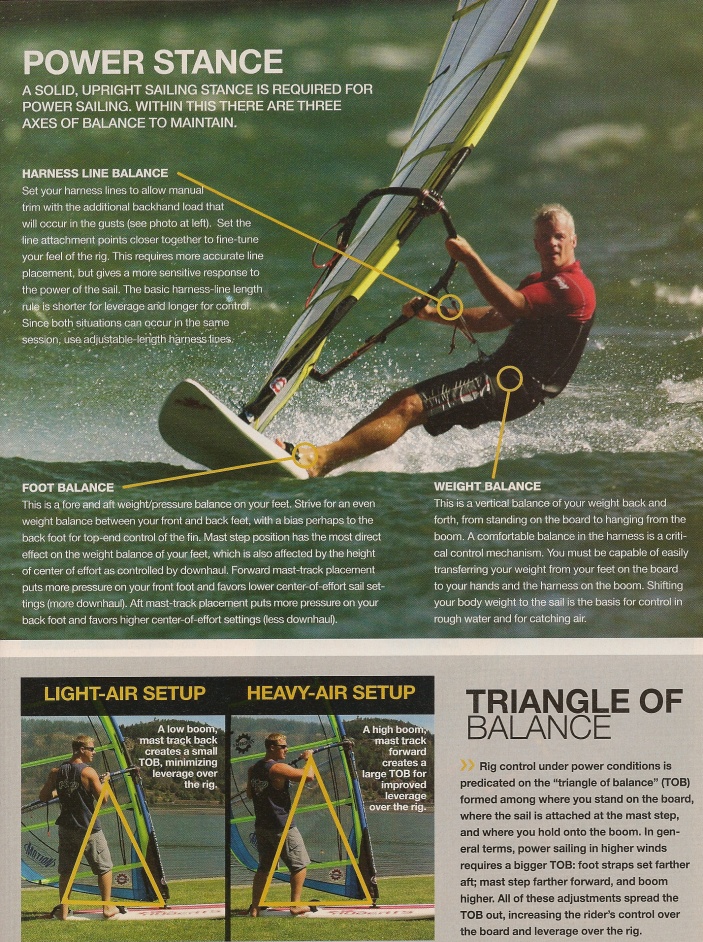
Power Stance — center of gravity

Windsurfing Magazine · Fall 2004 p.84

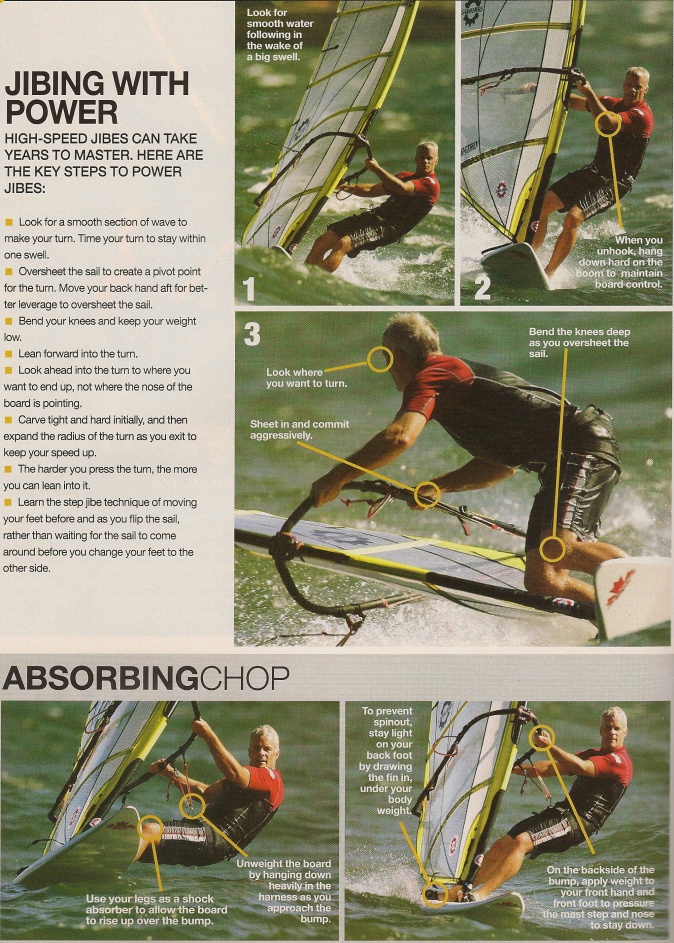
Jibing with Power

Windsurfing Magazine · Fall 2004 p.85

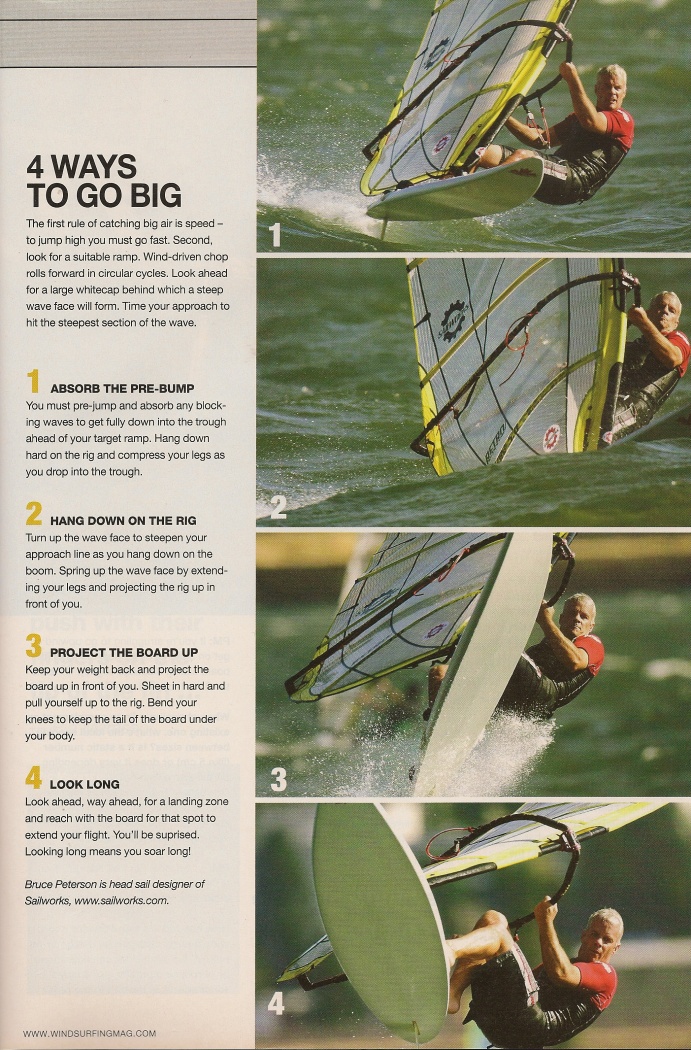
4 Ways to Go Big

Windsurfing Magazine · Fall 2004 p.89

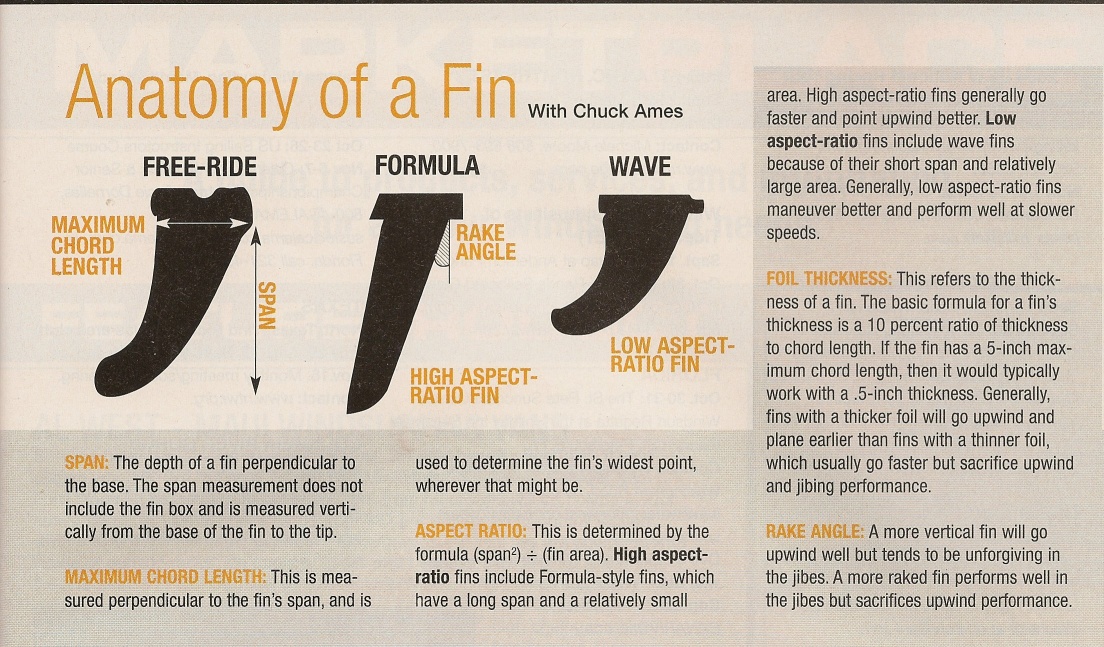
Types of Fins

Windsurfing Magazine · July 2005 p.86-87

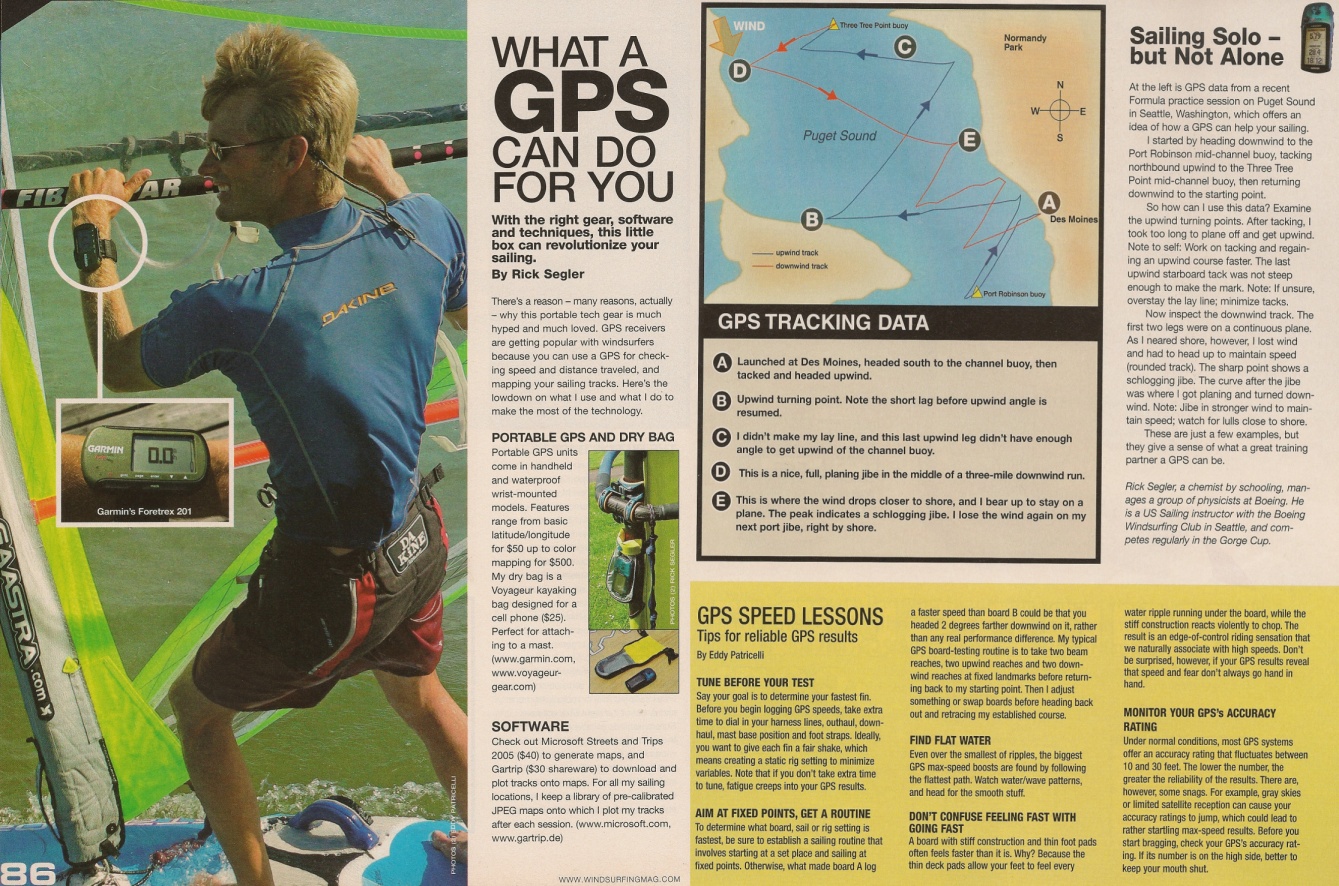
GPS for Windsurfing

Windsurfing Magazine · July 2005 p.80-81

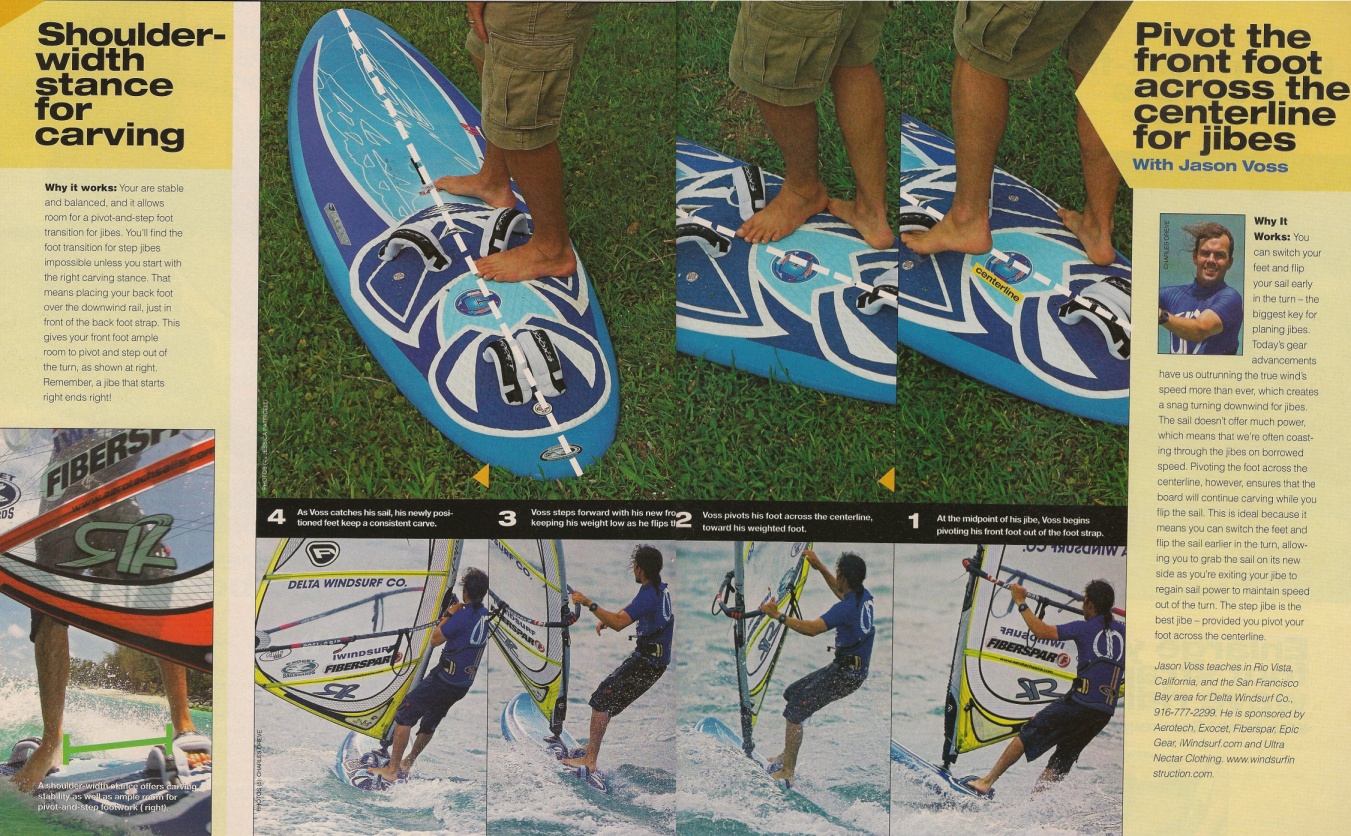
Front foot during jibe

Windsurfing Magazine · July 2005 p.82-83

Footwork during jibe

Windsurfing Magazine · July 2005 p.75-79

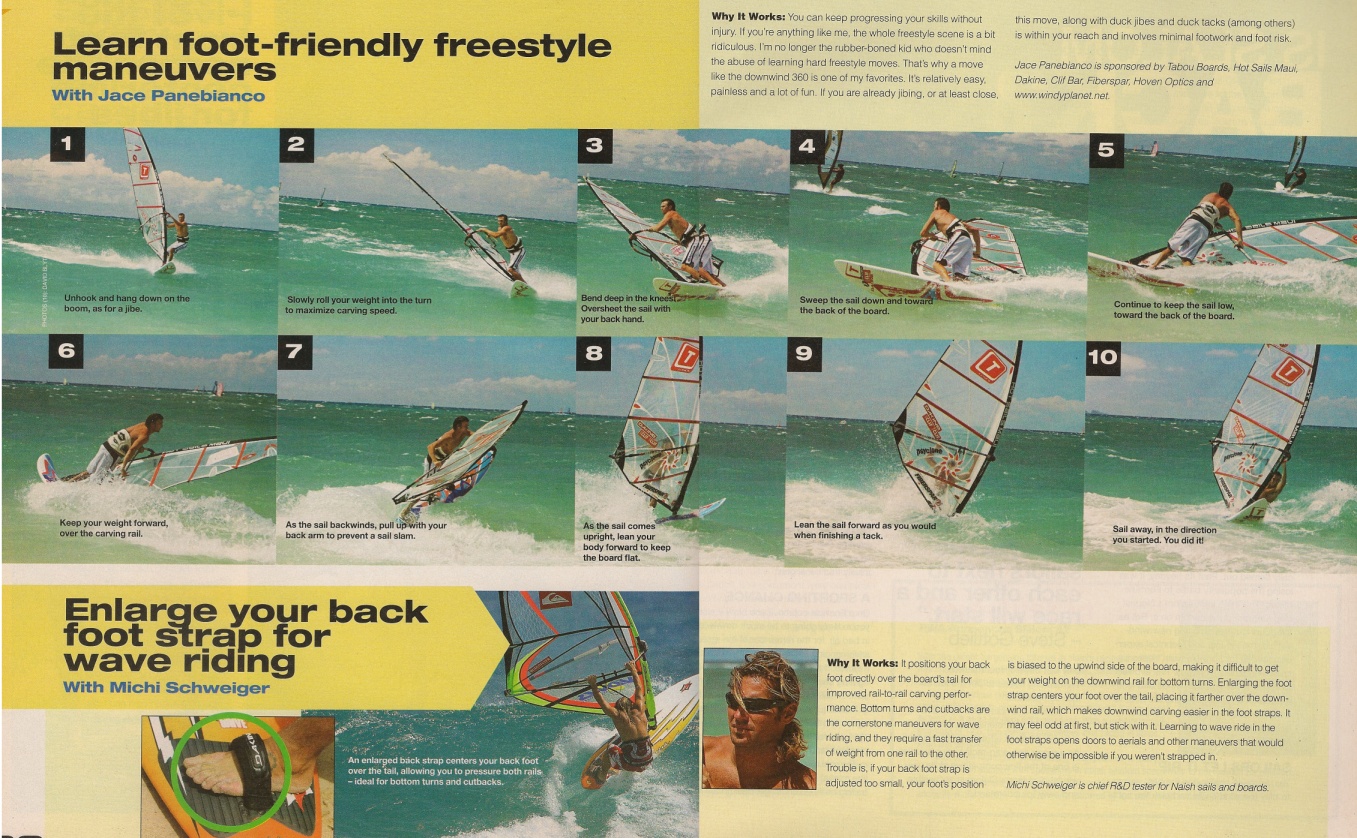
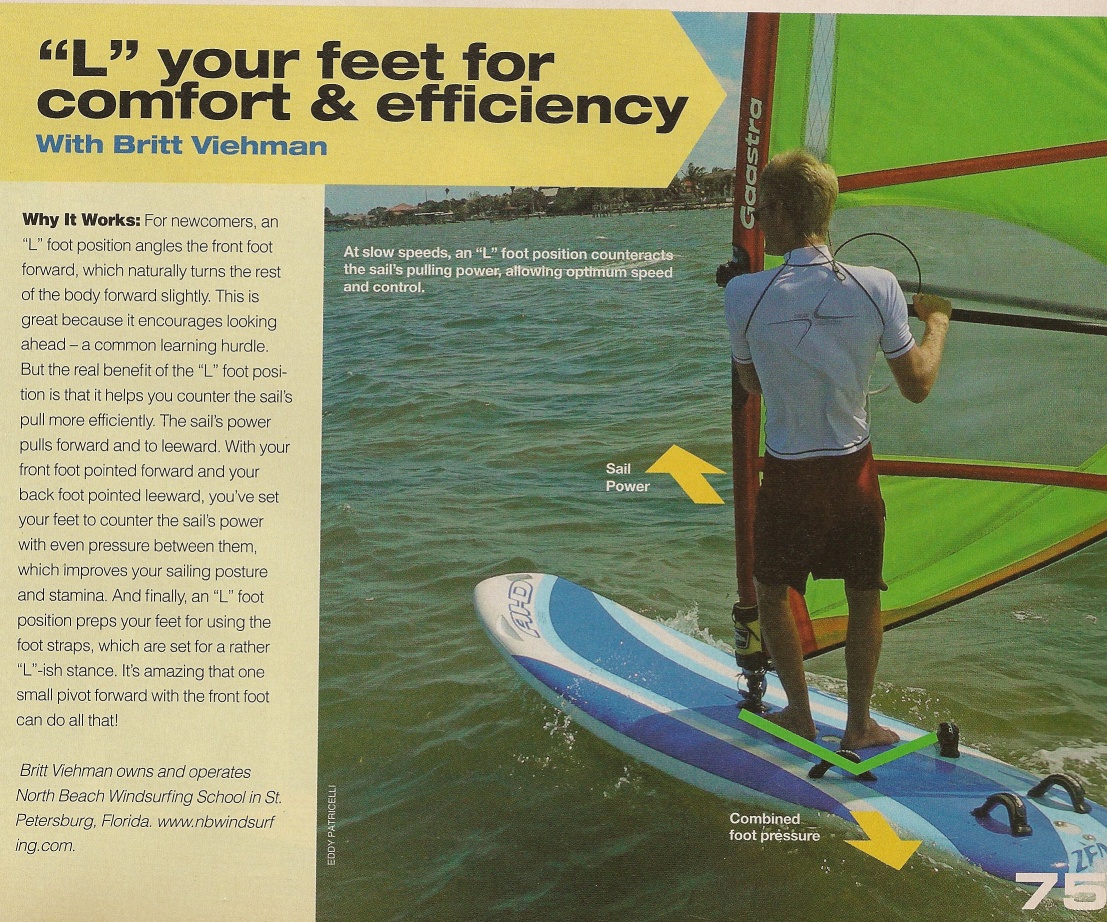
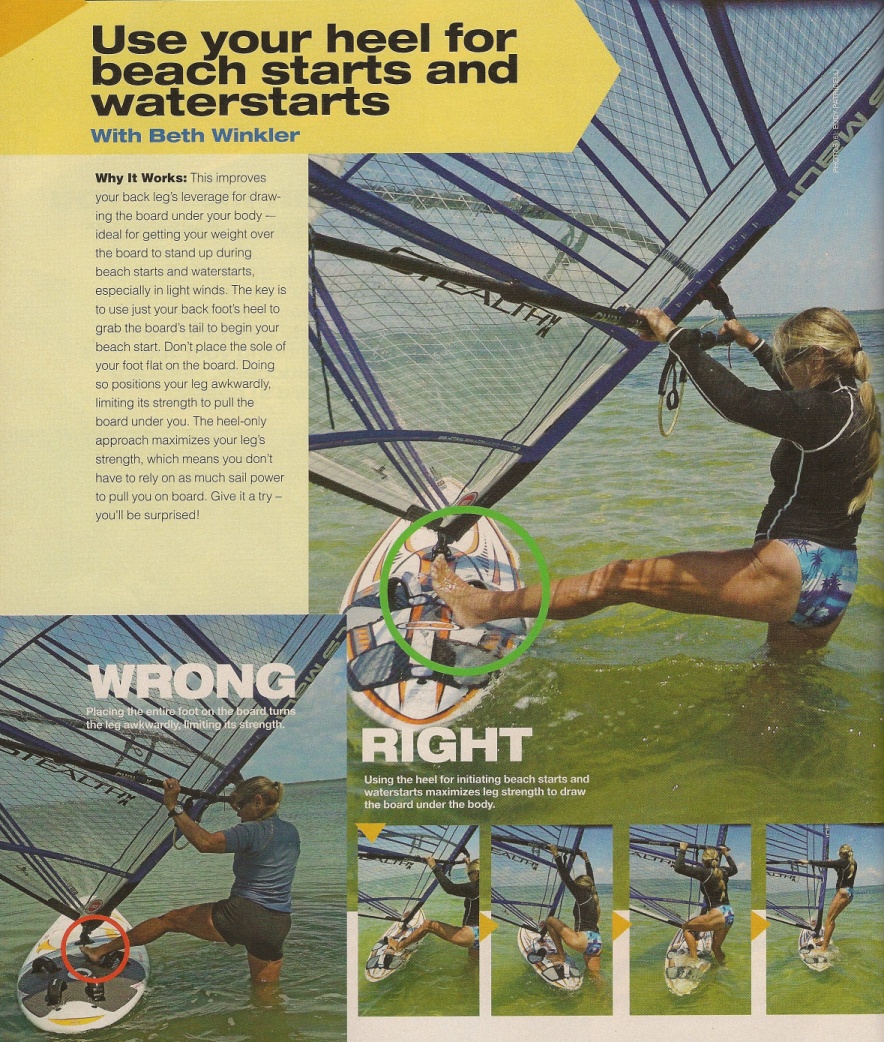
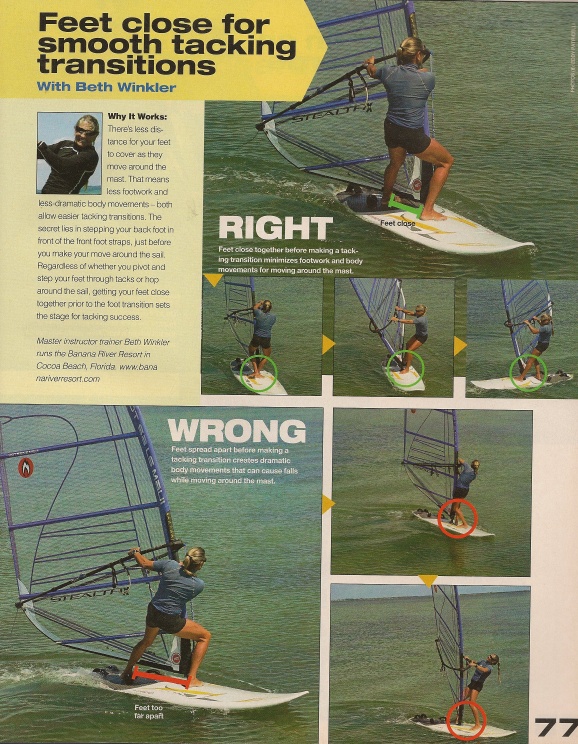
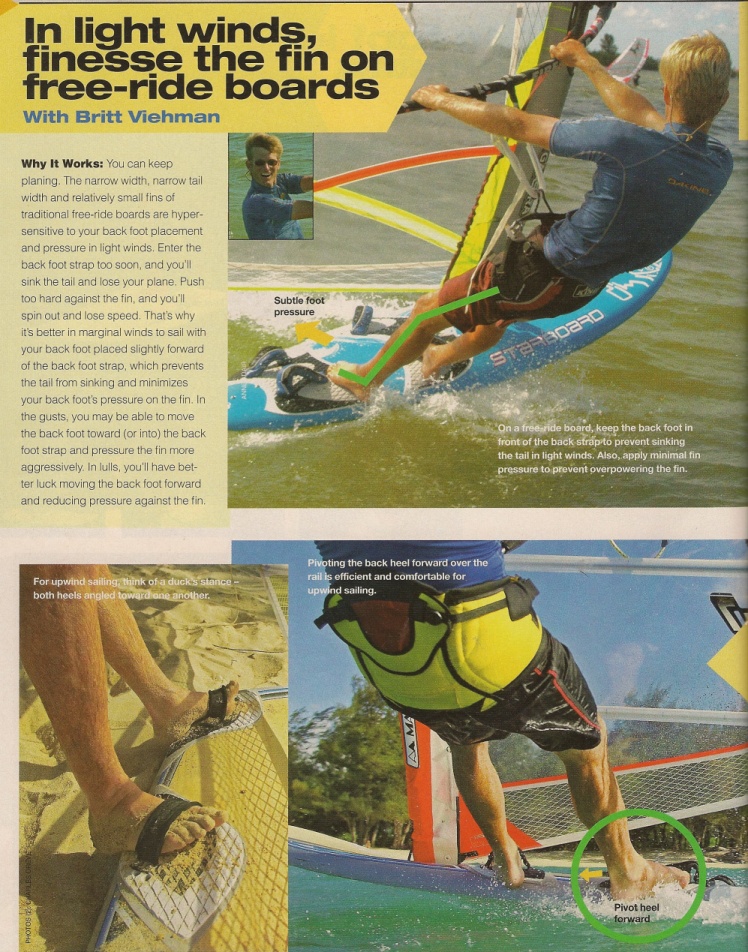
Beginner tips (5-in-1)

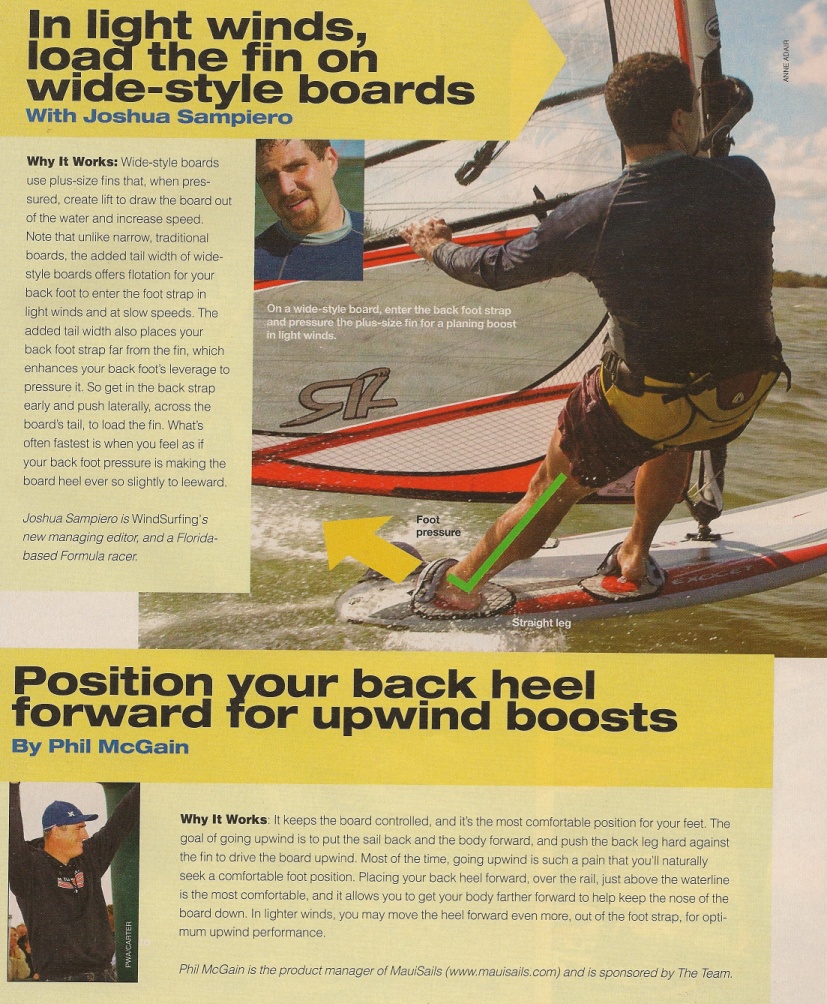
L-stance, heel usage, feet not too wide, rear foot for small/wide boards in light wind.

2007

Gear & Operation (2007)

Windsurfing Magazine · May 2007 p.24

Car transport vs. fuel economy

Windsurfing Magazine · May 2007 p.86

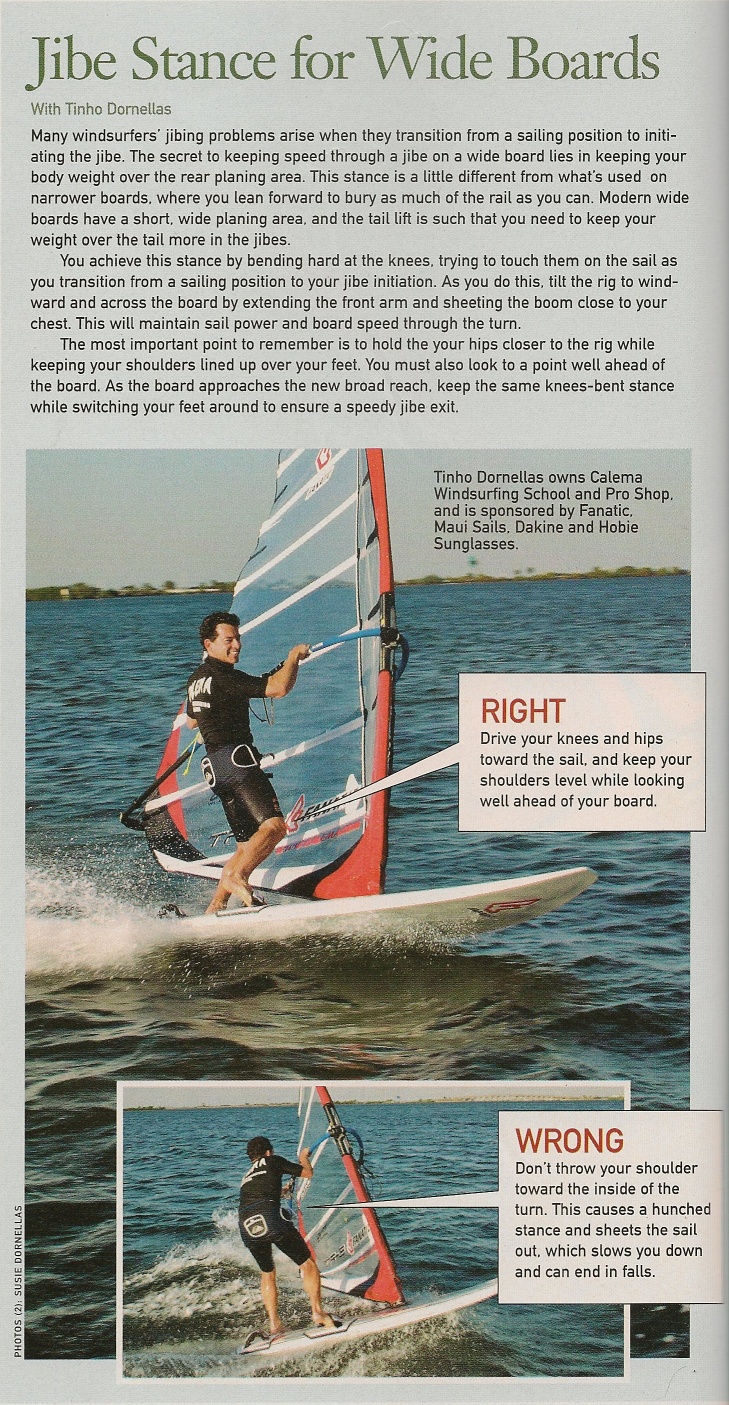
Wide-board jibe stance

Windsurfing Magazine

Bang for Your Buck

  1. For sails bigger than 7.0, jump at least 1.5 m² to the next size (7.0 → 8.5).
  2. When buying bigger, find the largest sail that fits your existing boom and mast to save money.
  3. Adjustable outhauls dramatically extend a sail's range, especially in gusty conditions.
  4. A larger fin lowers the threshold to plane on a given board/sail.
  5. A smaller fin raises the top-end control limit on a given board/sail.
  6. A higher carbon boom or mast supercharges your current light-air sail — cheaper than buying up a size.